
How Many Sofwave Treatments Do You Need—and When Will You See Results?
Mos
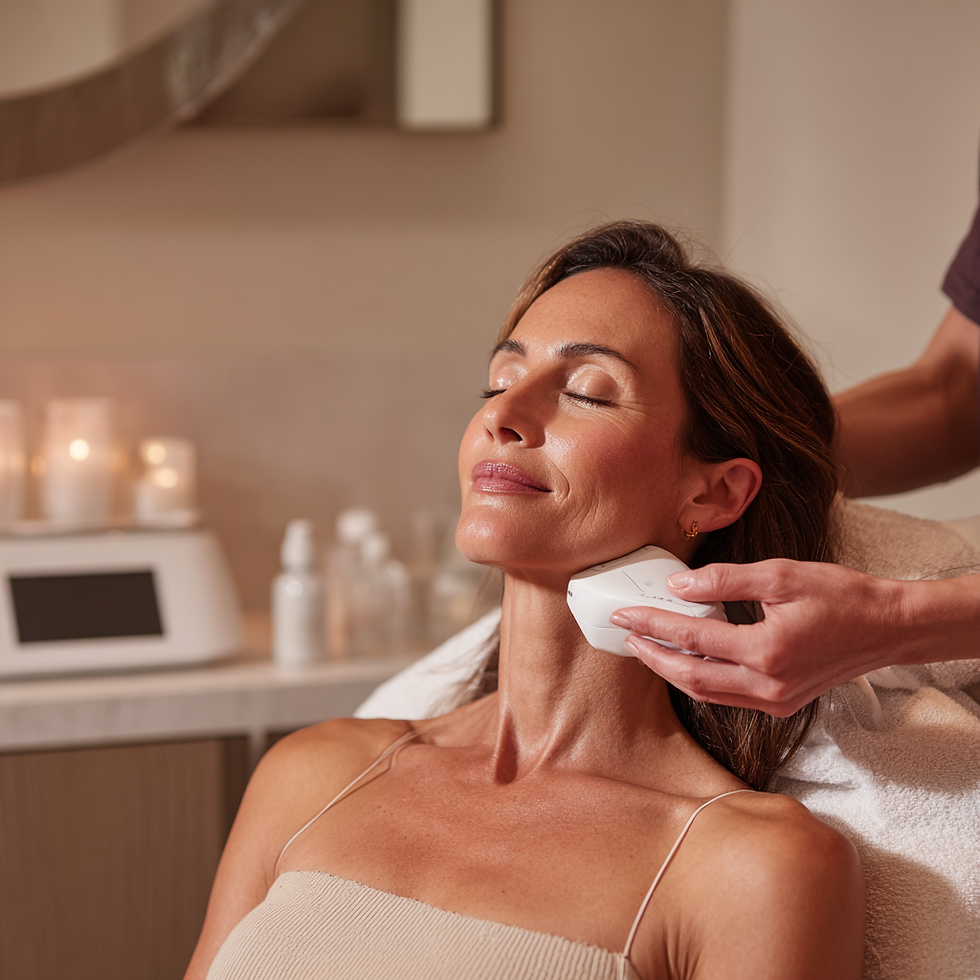
Most people need one Sofwave session for noticeable tightening; a second at 3–6 months can boost results if you have thicker skin, advanced laxity, or reduced collagen capacity. You’ll feel a mild lift within 0–72 hours, see early smoothing by 4–6 weeks, and reach peak improvement at 3–6 months as collagen remodels. Plan maintenance every 9–12 months. Protect skin with SPF, resume retinoids after 3–5 days, and avoid heat/excess workouts for 24 hours. Next, see how candidacy and alternatives compare.
What Sofwave Does and How It Works
Although it’s often compared to other skin-tightening devices, Sofwave uses a distinct approach: it delivers focused synchronous ultrasound energy to the mid-dermis (about 1.5 mm depth) to generate controlled thermal coagulation zones while protecting the epidermis with continuous cooling. You’ll feel brief warmth as Sofwave technology targets collagen-rich tissue with precision, sparing nerves and deeper structures. This energy profile initiates neocollagenesis and elastin remodeling, improving facial, neck, and brow laxity and fine lines.
Clinically, the thermal impact is confined, consistent, and repeatable, which supports predictable outcomes and safety across skin types. Key treatment benefits include minimal downtime, no incisions, and reliable dermal tightening driven by measurable collagen renewal. You can maintain normal activities immediately while your skin’s reparative cascade continues to build structure and visible firmness over time.
Typical Number of Sessions for Most Patients
Most patients need a single Sofwave session to achieve noticeable tightening, with results building over 3–6 months as collagen remodels. In published clinical trials, one full-face and neck treatment reliably improves skin firmness and fine lines with minimal downtime. Your typical session frequency is thus one appointment, with an optional second session at 3–6 months if you want additional lift or refinement.
Expect a streamlined patient experience: a 30–45 minute visit, topical anesthetic as needed, immediate return to regular activity, and progressive improvement as neocollagenesis unfolds. You’ll likely see early smoothing within weeks, followed by more precise definition by month three. If you’re optimizing for event timing or incremental gains, a staged two-session plan can compound results while preserving comfort, efficiency, and cost-effectiveness.
Factors That Influence Your Treatment Plan
Because your skin and goals are unique, your Sofwave plan hinges on a few core variables: baseline skin laxity and thickness, your age-related collagen capacity, treatment area (face vs. neck vs. brow), and your tolerance for incremental vs. single-session change. Your dermatologist will calibrate energy, pass count, and spacing to your skin type and lifestyle, prioritizing safety while maximizing collagen-remodeling potential. Medical history, medications, and prior procedures also shape parameters and cadence.
Skin biology: Thicker, oilier skin types often tolerate higher energies; thinner or sensitive skin may need conservative settings and staged sessions.
Chronologic and biologic age: Diminished fibroblast responsiveness may prompt multi-session planning.
Treatment area: Neck and brow typically require nuanced mapping.
Lifestyle variables: UV exposure, sleep, nutrition, and adherence influence interval timing and durability.
When Results Start to Show
With your plan tailored to skin biology and lifestyle, timing your expectations matters. Sofwave energizes mid-dermal collagen while preserving the epidermis, so results are visible following biologic remodeling, not instant inflation. You may notice subtle firmness as microinflammation subsides, but actual improvement emerges as new collagen and elastin organize. Set treatment expectations around gradual, cumulative change; your baseline laxity, age-related turnover, and sun history influence the pace.
You’ll likely perceive a smoother texture before measurable lift. Hydration, sleep, and UV protection support neocollagenesis, helping improvements consolidate. Expect asymmetry to normalize progressively as fibers mature. If you’re combining modalities, sequencing can shift depending on whether you perceive lift or refinement. Trust objective checkpoints—photos, skin elasticity metrics, and provider assessment—to verify gains and guide any interval adjustments.
Full Timeline: Immediate, 4–6 Weeks, and 3–6 Months
Although Sofwave works beneath the surface, its outcomes follow a predictable arc: immediate, early, and consolidated. You’ll notice a swift “tight” feel right after your session—transient edema and dermal contraction signal energy reached the mid-dermis. The treatment duration is short, but remodeling unfolds in phases as neocollagenesis and neoelastin form.
Immediate (0–72 hours): Mild lift; skin feels firmer; visible changes are subtle but confirm targeted thermal impact.
Early (4–6 weeks): Collagen remodeling becomes evident, with a smoother texture, refined lines, and better jawline definition, aligning with expected outcomes.
Consolidated (3–6 months): Peak improvement; increased dermal density, sustained tightening, and improved elasticity.
Variability factors: Age, baseline laxity, biologic healing rate, and photodamage influence response speed and magnitude.
Throughout, results build cumulatively as the extracellular matrix matures, delivering measurable, natural-looking tightening.
Maintenance: How Often to Repeat Treatments
Once peak remodeling settles in by 3–6 months, most patients maintain results with a single Sofwave session every 9–12 months. That treatment frequency aligns with collagen turnover and the gradual reaccumulation of laxity. You’ll optimize long-term care by reassessing skin quality annually: elasticity, fine lines, jawline definition, and neck texture. If you have faster collagen breakdown—due to high UV exposure, smoking, rapid weight shifts, or hormonally driven changes—plan for touch-ups at 6–9 months.
Calibrate intervals to objective markers: baseline photos, skin elasticity measurements, and provider palpation of dermal firmness. Maintain daily broad-spectrum sunscreen, consistent retinoid use, and adequate protein to support neocollagenesis. If you’re stacking biostimulatory injectables or antioxidants, space Sofwave at least 2–4 weeks apart. Reevaluate annually and adjust cadence as your skin biology evolves.
Sofwave vs. Ultherapy and Microneedling RF
Before you choose a device, it helps to know how each technology targets tissue. In a sofwave technology comparison, Sofwave uses synchronized parallel ultrasound to heat the mid-dermis (~1.5 mm) with integrated cooling, minimizing epidermal injury and downtime. Ultherapy delivers microfocused ultrasound energy to deeper planes (up to the SMAS, ~4.5 mm), which can lift but may be more uncomfortable; Ultherapy's effectiveness depends on energy mapping and patient tolerance. Microneedling RF inserts needles to deliver thermal coagulation columns at adjustable depths, improving texture while tightening.
Depth: Sofwave ~1.5 mm; Ultherapy 3.0–4.5 mm; Microneedling RF variable (0.5–3.5 mm).
Targets: Collagen remodeling vs lifting vectors vs texture + pores.
Comfort/downtime: Sofwave low; Ultherapy moderate; RF microneedling mild–moderate.
Precision: Ultrasound visualization (Ultherapy) vs uniform beam (Sofwave) vs mechanical placement (RF).
Ideal Candidates and Who May Need More Sessions
Understanding how each device interacts with tissue sets the stage for who benefits most from Sofwave and who may need additional sessions. You’re an ideal candidate if you have mild to moderate laxity, early jowling, soft neck creping, or fine-to-moderate lines, and you prefer noninvasive collagen remodeling with no downtime. Sofwave suits all skin tones because its energy is confined to the mid-dermis, minimizing epidermal risk.
You may need a higher session frequency if you have advanced laxity, thicker sebaceous skin, significant sun damage, or delayed wound-healing biology (e.g., smoking, suboptimal nutrition). Heavier tissues and mature collagen often respond, but more slowly. Post-weight-loss skin or strong platysmal banding can also require more passes or staged treatments. If your anatomy suggests structural descent, you’ll likely benefit from a multimodal plan and adjusted session frequency.
Tips to Maximize Results and Longevity
Even though Sofwave works beneath the surface, your choices around the treatment can amplify collagen remodeling and help results last. Focus on disciplined pre-treatment preparation and precise post-treatment care to protect neocollagenesis and maintain lift.
Optimize baseline skin health: Use a retinoid (if tolerated), daily broad-spectrum SPF 30+, and a peptide or growth-factor serum for four weeks pre-treatment. Pause actives 3–5 days before.
Manage inflammation, not injury: After treatment, use cool compresses, fragrance-free moisturizer, and mineral sunscreen. Avoid NSAIDs for 24–48 hours unless advised.
Protect collagen: Strict photoprotection, no heat-based facials or vigorous workouts for 24 hours, and no tanning. Resume retinoids after skin re-equilibrates (typically 3–5 days).
Maintain results strategically: Schedule evidence-based adjuncts—botulinum toxin for line softening, hyaluronic acid fillers for volume, and annual Sofwave maintenance—calibrated to your skin’s response and goals.
Frequently Asked Questions
1. How many Sofwave treatments do most people need?
For most people, just one treatment is enough to achieve noticeable skin tightening and lifting. However, if you have more advanced skin laxity, deeper wrinkles, or mature skin, your provider may recommend a second session spaced 3 to 6 months apart for optimal collagen remodeling.
2. When will I start seeing results from Sofwave?
While you might notice a slight "freshness" or subtle firming right away due to mild post-treatment swelling, true results take time. You’ll typically begin to see visible lifting and tightening around 2 to 3 months, with peak collagen building occurring at 3 to 6 months after your session.
3. How long do Sofwave results last?
Sofwave results generally last 1 to 2 years. Because the treatment stimulates your body’s natural collagen production, your skin will continue to age naturally from its newly refreshed baseline. Most patients schedule a maintenance treatment once a year to preserve their results.
4. Is there any downtime after a Sofwave treatment?
There is zero social downtime. You might experience mild redness or slight swelling immediately after the procedure, but this usually subsides within a few hours. You can put on makeup and return to your normal daily activities—including work and exercise—right after walking out of the clinic.
5. Is Sofwave painful, and what does it feel like?
Sofwave uses SUPERB™ (Synchronous Ultrasound Parallel Beam) technology, which features integrated cooling (Sofcool™) to protect the outer layer of your skin. Most patients feel a warm, zapping sensation during the pulses. Providers typically apply a topical numbing cream 45–60 minutes before the treatment to make it very manageable.
6. How is Sofwave different from Ultherapy or Thermage?
While all three treat skin laxity, Sofwave delivers ultrasound energy at a precise depth of 1.5 mm in the mid-dermis—the layer richest in collagen—without targeting deeper tissues like nerves, fat, or muscle. This makes Sofwave generally less painful than older technologies like Ultherapy while reducing the risk of facial fat loss.
7. Who is the ideal candidate for Sofwave?
Sofwave is ideal for men and women in their 30s to 60s who are experiencing mild-to-moderate skin sagging, fine lines, or loss of firmness around the jawline, neck, brows, or chest. Because ultrasound energy bypasses the pigment in the skin, it is safe and effective for all skin tones (Fitzpatrick types I–VI).
Conclusion
You want lift without downtime, precision without guesswork. Sofwave gives both. One session often prompts collagen remodeling, but personalized factors—age, laxity, skin thickness—may warrant two sessions. You’ll notice early firmness in weeks, then measurable tightening by three to six months. Unlike promises, data guides timing, intervals, and maintenance. Whereas Ultherapy dives deeper and microneedling RF breaks the surface, Sofwave targets the sweet spot—safely, predictably. Pair it with sunscreen, retinoids, and healthy habits, and you’ll extend results while preserving natural contours.


Comments